 Where you live matters for your health, and new research shows this is especially true when it comes to alcohol problems among young Mexican Americans living near the US-Mexico border.
Researchers studied 575 Mexican American men and women between ages 18 and 30 in San Diego County, California, to understand how their residential neighborhoods and cultural experiences relate to alcohol use disorder (AUD). The study focused on two neighborhood characteristics: the percentage of Mexican American residents in the area (what researchers call “ethnic density”) and how far participants lived from the nearest US-Mexico border crossing point.
The findings revealed important differences between women and men. For young women, living in neighborhoods with higher concentrations of Mexican American residents appeared protective. For every 10% increase in Mexican American neighbors, there was approximately a 20% reduction in the odds of having AUD. Similarly, women living farther from the border had lower rates of AUD, with each additional mile of distance associated with about a 4% reduction in alcohol disorder risk.
Interestingly, these neighborhood effects weren’t observed for men. This may reflect different social expectations and drinking norms for Mexican American men and women in these communities. Traditional attitudes that are more permissive of drinking among men, combined with stronger informal social controls on women’s behavior in ethnic enclaves, may explain why neighborhood characteristics seem to offer more protection for women.
The study also examined “acculturative stress,” which refers to the strain that comes from navigating conflicting cultural identities and expectations. This type of stress was linked to higher rates of AUD for both men and women. Examples of acculturative stress include experiencing discrimination, dealing with language barriers, or managing conflicting values and expectations between Mexican and American cultures. For every one-point increase in acculturative stress, both men and women showed about a 32% increase in the odds of having AUD.
Researchers had expected that living in neighborhoods with more Mexican American residents or closer to the border might reduce acculturative stress or strengthen ethnic identity (one’s sense of belonging to their ethnic background), which in turn would affect alcohol problems. However, the data didn’t support these connections. Neighborhood characteristics didn’t appear to influence acculturative stress or ethnic identity levels, and ethnic identity itself wasn’t related to AUD in this sample.
About 24% of participants met criteria for current AUD, which is notably high for a community sample. Men were more likely than women to have AUD (34% versus 18%). The study also found that having a family history of AUD increased risk, particularly for men.
These findings have important implications for prevention efforts. They suggest that addressing acculturative stress (the psychological strain of navigating between cultures) should be a priority in alcohol prevention programs for Mexican American young adults. The research also highlights that neighborhood-based interventions might be particularly beneficial for young women in this population.
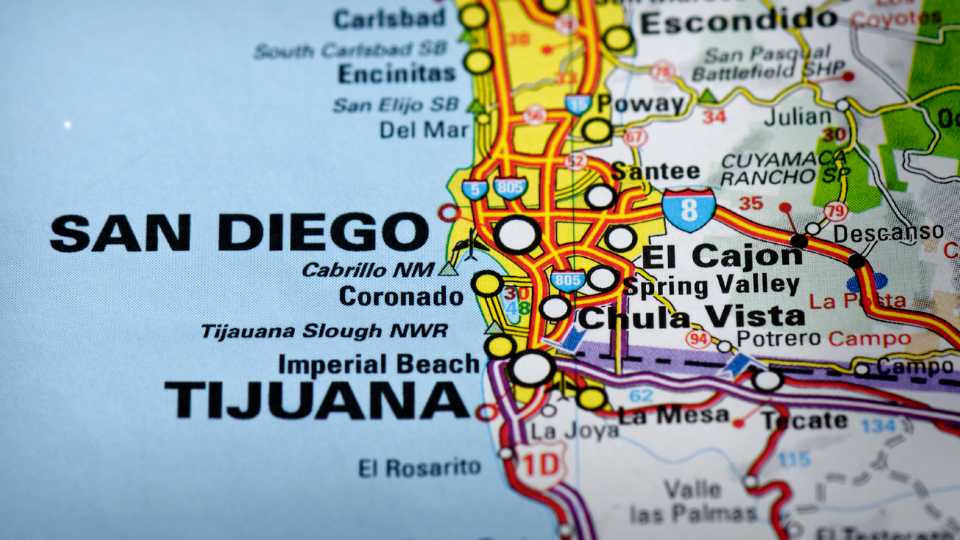
The study took place in San Diego County, which is part of the US-Mexico border region and home to diverse Mexican American communities. This geographic context is important because border regions have unique characteristics, including proximity to family and cultural institutions in Mexico, but also potential exposure to cross-border violence and instability.
One limitation is that this research used cross-sectional data, meaning researchers observed participants at a single point in time rather than following them over years. This makes it difficult to determine whether people with alcohol problems tend to move to certain neighborhoods, or whether neighborhood characteristics actually influence drinking behaviors over time. Future longitudinal studies could help clarify these relationships.
The results underscore that addressing alcohol problems in Mexican American communities requires understanding not just individual behaviors, but also the social and cultural contexts in which young people live. Effective prevention strategies should consider both the stresses of navigating between cultures and the protective factors that neighborhoods can provide, particularly for young women.
Tam, C. C., Karriker-Jaffe, K. J., Li, L., Patterson, D., Drzarte, S. E., Wills, D. N., Gilder, D. A., & Ehlers, C. L. (2025). Neighborhoods, cultural factors, and alcohol use disorder: A role for acculturative stress in Mexican American young adults. International Journal of Alcohol and Drug Research, 13(2), 38-48. https://doi.org/10.7895/ijadr.605